◦ Transformation of warfare in the era of strategic competition (including the role of AI, autonomous systems, cyber and space capabilities);
◦ Resilience of states and societies against hybrid threats and grey zone activities (including the protection of critical infrastructure and cognitive security).
Submissions not directly related to these themes are also welcome and will be considered.
Chair: Marzena Zakowska
Chair: Art Johanson
Chair: Christopher Renahan
Chair: Peter Olsthoorn
Chair: Olavi Jänes
Chair: Herwig Jedlaucnik
Chair: Rene Moelker
Chair: Markus Gauster
- Military education as an organisational capability central to innovation
- Implications of multi-domain operations, hybrid warfare, and rapid technological change for officer development
- Critical thinking as a core military competence in an era of technological and operational change
Submissions on other topics related to military education are also welcome.
Chair: Anne Marie Hagen
Cluster I: Reframing the Grammar of Strategy in Permanent Competition
1. Strategic competition beyond deterrence: coercion, compellence, and the grammar of modern statecraft
Contemporary strategic practice extends well beyond deterrence into layered coercion, economic leverage, political warfare, and strategic signalling through proxies and demonstrations of capability. This theme invites papers that examine how states pursue objectives through compellence, denial, and pressure short of war in an era of protracted geoeconomic and geopolitical confrontation. Contributions may address sanctions regimes as strategic instruments, gray-zone maritime and hybrid operations, coercive diplomacy in specific theatres, or theoretical reframings of the coercion-compellence spectrum.
2. Cognitive security as a strategic domain
Societal will and resilience constitute strategic variables in protracted competition. Recognised as a NATO priority and an emerging operational domain, cognitive security demands treatment at the strategic level rather than merely as a defensive problem. This theme invites papers on how states build, sustain, and defend the societal cohesion necessary to resist disinformation, polarisation, and adversarial influence operations that treat the home front as a contested domain. Contributions addressing the vulnerability-resilience nexus as a dimension of national strategy are particularly welcome.
3. The political economy of defence: industrial base, supply chains, and strategic autonomy
Strategy requires an industrial foundation. Europe’s defence spending surge collides with procurement bottlenecks, fragile supply chains, critical-minerals dependencies, and transatlantic burden-sharing demands. This theme welcomes papers exploring the intersection of geoeconomics and military strategy: how defence industrial mobilisation, export controls, tariff regimes, and supply chain resilience function as strategic tools, and whether spending pledges translate into genuine capability without the production base to sustain them.
4. Grand strategy for an age of permanent competition: can Europe think strategically?
Europe possesses capabilities, institutions, and interests, yet arguably still lacks a coherent strategic culture adequate to an era of protracted competition rather than episodic wars. This capstone theme invites papers assessing whether and how European states and institutions can develop viable grand strategies amid transatlantic uncertainty, populist fragmentation, and the structural shift from a US-guaranteed security order toward one requiring greater European strategic agency.
Cluster II: War, Termination, and Escalation Management
5. War aims and endgames: the neglected art of thinking about how wars end
Strategic studies has over-invested in deterrence and escalation dynamics and under-invested in termination theory. Ukraine exemplifies protracted attritional war with no clear off-ramp; other conflicts illustrate termination through exhaustion rather than negotiated settlement. This theme seeks papers on war termination in multi-actor and hybrid contexts, the relationship between war aims and achievable outcomes, negotiation under conditions of protracted conflict, and the strategic logic governing the space between fighting and sustainable peace.
6. Nuclear strategy in a multipolar world: escalation management beyond Cold War models
The bilateral Cold War framework for nuclear strategy is analytically exhausted. Tripolar modernisation, the post-New START vacuum, tactical nuclear signalling, and AI and cyber vulnerabilities in command and control demand new models for extended deterrence and crisis stability. Papers are invited on escalation management in multipolar nuclear contexts, the future of arms control architecture, proliferation dynamics, and the interaction between nuclear posture and conventional or hybrid conflict.
Cluster III: Alliances, Agency, and Strategic Domains
7. Alliance cohesion under stress: NATO strategy when guarantees are uncertain
Transatlantic burden-sharing conditionality, US strategic sequencing prioritising homeland and Indo-Pacific, and European autonomy efforts force allies to confront credibility gaps in extended deterrence. This theme invites papers on alliance management under conditions of strategic uncertainty, the political dynamics of cohesion and fragmentation within NATO, and alternative European security architectures.
8. Small state strategy in great power competition
How do small and medium powers preserve strategic agency when systemic pressures push toward bandwagoning or subordination? This theme welcomes contributions examining hedging strategies, niche capability development, multilateral balancing, and the strategic dilemmas facing Nordic, Baltic, and Central European states operating at the intersection of great power competition.
9. The return of geography: maritime, Arctic, and northern European strategic spaces
Geography has reasserted itself as a strategic variable after decades of network-centric abstraction. Arctic opening, Baltic Sea contestation, chokepoint vulnerability, and climate-driven access changes underscore the enduring relevance of physical terrain. Papers are invited on the strategic implications of specific geographical spaces, the interaction between geography and hybrid threats, and how terrain shapes strategic options in northern Europe and beyond.
10. Strategy and AI: decision advantage, tempo, and the changing character of strategic command
Distinct from operational applications of artificial intelligence, this theme addresses what AI does to strategic decision-making itself. Compressed decision cycles, algorithmic escalation risks, information overload at the command level, and the potential transformation of command philosophy all demand serious strategic analysis. Papers are invited on AI as a strategic disruptor rather than merely an operational enabler.
11. Any other related topics that fall within the strategic-level scope of WG10.
Chair: Jānis Bērziņš
Invite your connections
Outline Program
Welcome to Tartu: Where Heritage Meets Innovation
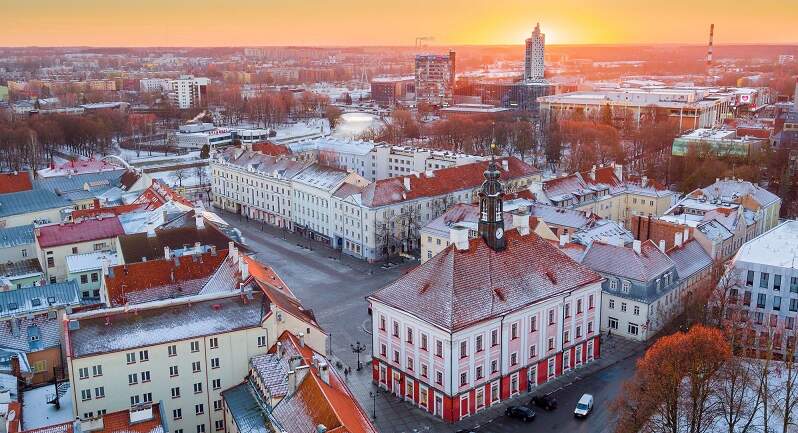
Tartu, Europe’s 2024 Capital of Culture, offers an inspiring setting for debating the future of military sciences. As the oldest city in the Baltics, Tartu has long been the intellectual heartbeat of Estonia and its undisputed hub for education. It is a city defined by the "Tartu Spirit"—a unique blend of historical wisdom and a restless drive for innovation—making it the ideal backdrop for a dynamic forum where operational experience meets cutting-edge research.
What makes Tartu truly exceptional is its standing as a bastion of professional military education (PME). The city proudly hosts two of the region's most significant institutions: the Estonian Military Academy and the Baltic Defence College. This concentrated expertise ensures that interdisciplinary conversations here are not just theoretical, but are grounded in a legacy of strategic excellence that shapes tomorrow’s defence solutions.
Often described as a "hidden gem," Tartu is a place many discover by chance, only to find themselves captivated by its charm and depth. While it may be our small hometown, it offers a wealth of experiences—from its neoclassical university architecture to its vibrant tech scene. We invite you to venture off the beaten path and join us in a city that serves as the gateway to discovering the rest of Estonia’s resilient and forward-thinking spirit.